
Join the God Wins Newsletter
Christian news, commentary and Gospel outreach delivered directly to your inbox.
Lambeth Palace has withdrawn a prestigious interfaith award from Pakistani Muslim cleric Hafiz Muhammad Tahir Mehmood Ashrafi after historic remarks concerning Osama bin Laden resurfaced — just days after the Archbishop of Canterbury presented him with the honour.
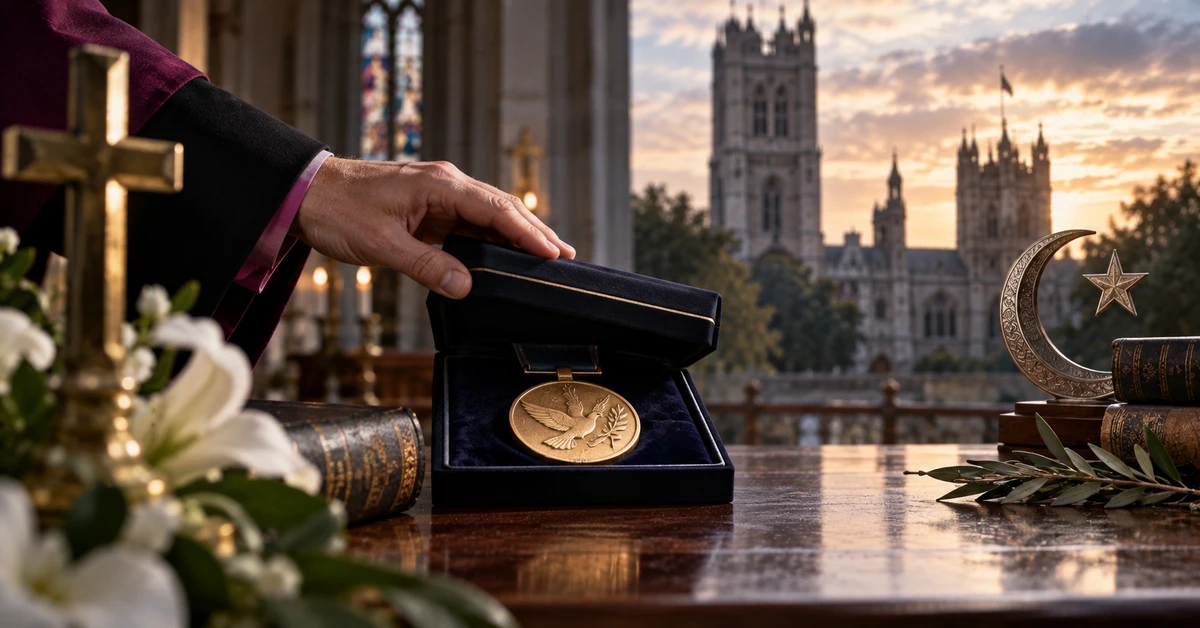
Ashrafi received the Hubert Walter Award for Reconciliation and Interfaith Cooperation from Archbishop Sarah Mullally on 11 September, the 25th anniversary of the 9/11 terrorist attacks.
He had been recognised for what Lambeth Palace described as his longstanding support for religious minorities in Pakistan, particularly Christians, and his work promoting interfaith harmony.
Six days later, the award was withdrawn.
Lambeth Palace said previous comments made by Ashrafi had come to light which caused it to reconsider the decision.
The 2007 Remarks
The controversy centres on comments Ashrafi made in 2007 amid protests over Britain awarding a knighthood to The Satanic Verses author Salman Rushdie.
According to reports by Sky News and ITV News, Ashrafi said he would give Osama bin Laden the title “Saifullah” — meaning “Sword of God” — for “serving Muslims by waging jihad against infidels.”
The timing of the Lambeth award added particular sensitivity to the controversy.
It was presented on the 25th anniversary of the September 11 attacks, which were orchestrated by bin Laden and killed nearly 3,000 people.
Ashrafi disputes the suggestion that his comments amounted to an endorsement of bin Laden.
His spokesperson said the remarks had been presented without their proper context and were intended as a comparison illustrating Muslim anger over the honour given to Rushdie.
Ashrafi has also pointed to his subsequent record opposing terrorism and violent extremism.
Lambeth Palace nevertheless decided that the earlier remarks made the award untenable and contacted Ashrafi to tell him it had been withdrawn.
Support for Pakistani Christians
There is another part of the story that should not disappear amid the controversy.
Lambeth Palace says Ashrafi’s support for religious minorities in Pakistan — particularly the Christian community — was the reason he received the award in the first place.
The Palace said that work is valued by many Christians in Pakistan, including the country’s Anglican Church.
That leaves Christians with a more difficult question than whether dialogue between Christianity and Islam should take place.
Lambeth Palace itself defended the principle of engaging across profound differences, saying interfaith dialogue requires people to engage with one another despite deeply held disagreements.
The controversy instead exposes a distinction between engaging someone and honouring them.
Christians can speak with Muslims, work alongside them to defend persecuted minorities and recognise genuine acts of courage without pretending profound theological or moral disagreements do not exist.
Public honours carry a different significance.
They place the reputation and judgement of the institution granting them behind the recipient.
In Ashrafi’s case, two things can therefore be true at once.
His work supporting Christians in Pakistan can be real and valued by Christians who benefited from it.
And remarks concerning Osama bin Laden can be serious enough for Lambeth Palace to conclude that presenting him with an award for reconciliation was no longer appropriate.
Interfaith engagement requires the courage to cross profound religious divides. Public honour also requires discernment about where the Church places its name.
That tension, rather than a simplistic story about Christianity versus Islam, is what makes this episode worth examining.
Sources
Join the God Wins Newsletter
Christian news, commentary and Gospel outreach delivered directly to your inbox.