
Join the God Wins Newsletter
Christian news, commentary and Gospel outreach delivered directly to your inbox.
On 25 September 1392, Sergius of Radonezh, one of the most influential monastic figures in Russian Christian history, died at the monastery that had grown from a small hermitage in the forests north of Moscow.
Born Bartholomew near Rostov, Sergius withdrew with his brother Stephen into the forests around Radonezh. There they established a simple hermitage and built a small chapel dedicated to the Holy Trinity.
The brothers initially sought solitude rather than influence. Stephen eventually left, but Sergius remained and continued his life of prayer and asceticism.
Over time, other men were drawn to the hermitage and a monastic community developed around him. The settlement eventually became the monastery now known as the Trinity-Sergius Lavra.
Sergius became known for his austere way of life, humility and spiritual counsel. His growing reputation brought opportunities for greater ecclesiastical authority, but he repeatedly resisted advancement.
Among the positions he declined was the metropolitanate of Moscow, one of the most important offices in the Russian Church.
His influence nevertheless extended far beyond the monastery.
Historical accounts associate Sergius with attempts to reconcile rival Russian princes during a period marked by political division. He is also traditionally associated with spiritual counsel given to Prince Dmitri before the Battle of Kulikovo in 1380.
That connection later became an important part of Russian historical memory, sometimes acquiring patriotic interpretations beyond what can be established about the medieval events themselves.
Sergius’ more enduring Christian legacy was the monastic movement that developed around him.
His disciples went on to establish numerous monasteries across northern and northeastern Rus’, helping to spread a significant period of monastic renewal. Communities inspired by his example carried the pattern of prayer, discipline and communal Christian life far beyond the original forest settlement.
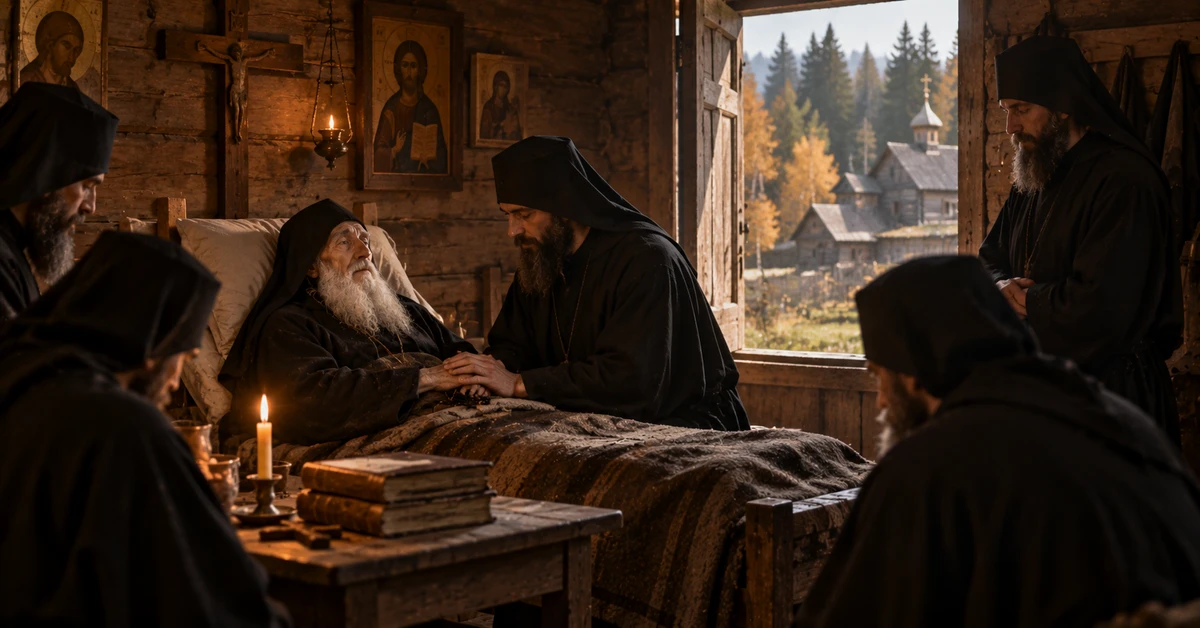
As Sergius approached death, he prepared the community to continue without him.
According to the Orthodox Church in America, he appointed his disciple Nikon to succeed him as abbot. His final instruction to the monks emphasised fear of God, purity of soul and sincere love.
Sergius died on 25 September 1392.
By then, the isolated hermitage established in the forest decades earlier had become the centre of a movement whose influence would continue through the monasteries founded by his followers.
His story is striking because that influence did not begin with political authority, wealth or high ecclesiastical office.
It began with a small chapel, a forest community and a monk who repeatedly declined opportunities for greater status.
More than six centuries later, Sergius of Radonezh remains remembered as a major figure in Eastern Christian history and as one of the central figures in the revival of monastic life in medieval Rus’.
Christian influence does not always begin in palaces.
Sometimes it begins in a wooden cell.
Sources
- Orthodox Church in America — Venerable Sergius of Radonezh
- New Catholic Encyclopedia via Encyclopedia.com — Sergius of Radonezh
- The Concise Oxford Dictionary of World Religions via Encyclopedia.com
Join the God Wins Newsletter
Christian news, commentary and Gospel outreach delivered directly to your inbox.