
Join the God Wins Newsletter
Christian news, commentary and Gospel outreach delivered directly to your inbox.
Not every Christian story is a story of decline. The Global Methodist Church says it now has 7,250 congregations worldwide, up from roughly 4,700 following its 2024 General Conference, while its international structure is expanding rapidly.
Much of the story told about Christianity in the West is a story of decline.
Churches close.
Congregations age.
Attendance falls.
Denominations lose members.
But that is not the whole Christian story.
The Global Methodist Church says it has grown from approximately 4,700 congregations following its 2024 General Conference to 7,250 today.
Over the same period, the number of annual conferences within the denomination has increased from 36 to 55.
And according to the church, the number of annual conferences outside the United States has more than doubled.
Those figures come from the denomination itself and should be understood as such.
But if they accurately represent its expansion, they describe remarkable growth for a church that formally launched only in 2022.
From 4,700 to 7,250 congregations
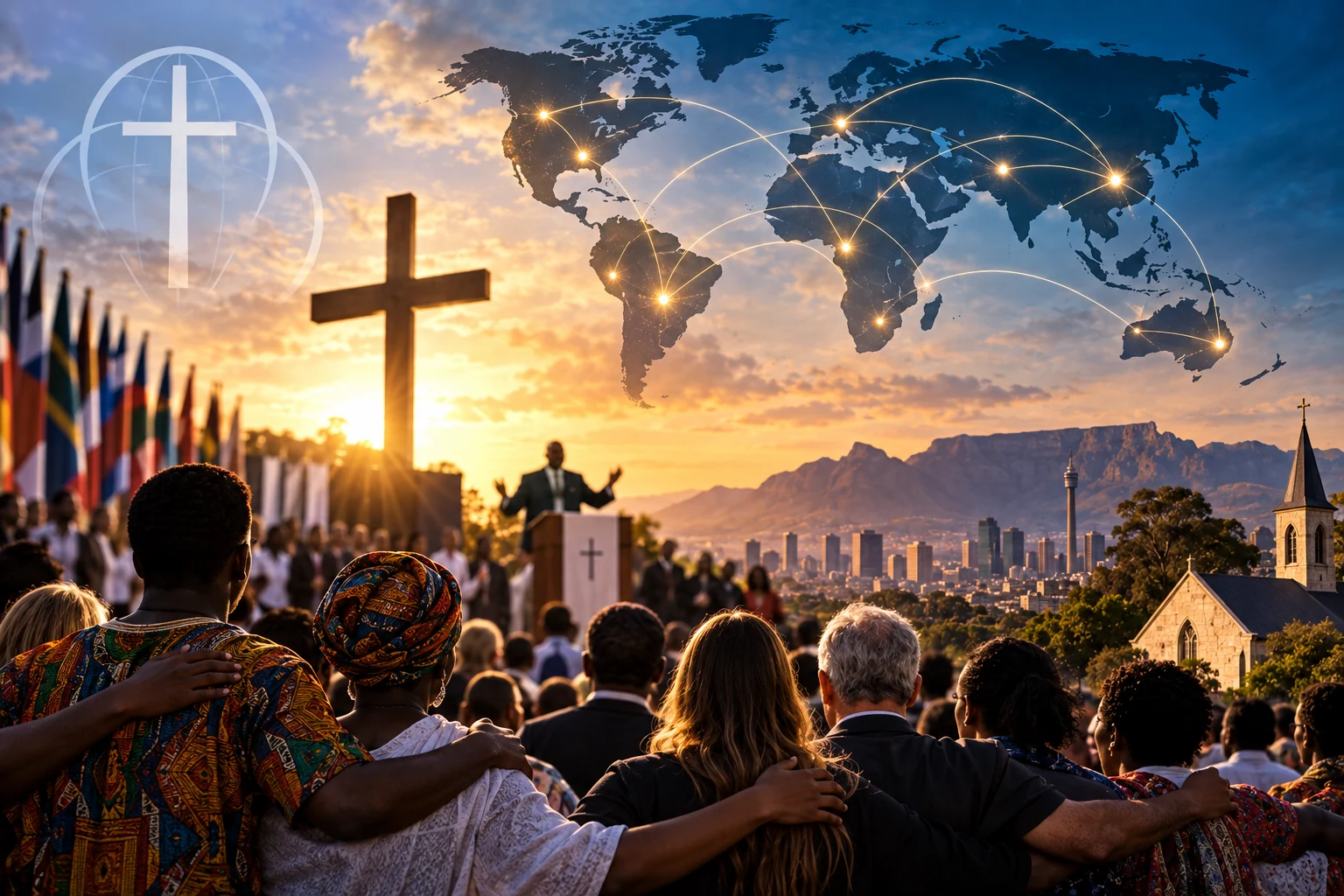
The figures were released following the Global Methodist Church’s 2026 General Conference in Johannesburg, South Africa.
The location itself was significant.
It was the denomination’s first General Conference held in Africa and another indication of its ambition to become something more than an American church created from a Methodist split.
According to the denomination, approximately 4,700 congregations were represented following its 2024 General Conference.
It now reports 7,250.
That is an increase of roughly 2,550 congregations.
The denomination’s organisational footprint has expanded alongside it.
Annual conferences have risen from 36 to 55, while international conferences have grown particularly strongly.
A church born from a Methodist divide
The Global Methodist Church formally began operations on 1 May 2022.
Its emergence was closely connected to the long-running theological conflict within the United Methodist Church, particularly over biblical authority, marriage and sexual ethics.
The new denomination positioned itself as a theologically conservative expression of Wesleyan Christianity.
Thousands of congregations subsequently left the United Methodist Church during its disaffiliation process, with many joining the Global Methodist Church.
That history matters when interpreting the growth figures.
Not every congregation represented by the increase is necessarily a newly planted church.
Some are existing congregations that changed denominational affiliation.
Growth in the number of congregations therefore cannot automatically be treated as equivalent to growth in Christian conversions, individual membership or weekly church attendance.
But something significant is nevertheless happening institutionally.
A denomination that did not formally exist five years ago is constructing a worldwide ecclesiastical structure.
Johannesburg marks another step
The Johannesburg gathering represented another stage in that development.
Delegates met from around the world to establish doctrine, governance and leadership for the growing denomination.
Among the most significant decisions was the election of the church’s first regular, full-time Assembly of Bishops.
The denomination also continued developing its Articles of Faith and the structures intended to govern a church operating across different countries and cultures.
Holding the conference in Africa carried symbolic importance too.
Christianity’s demographic centre of gravity has been moving away from Europe and North America for decades.
African Christianity has expanded enormously, while many historic Western denominations have struggled with falling participation.
The Global Methodist Church’s development therefore intersects with a much larger transformation taking place within global Christianity.
The numbers need qualification
Celebrating good news does not require exaggerating it.
The 7,250-congregation figure is supplied by the Global Methodist Church itself.
It is not the result of an independent global census.
Nor does an increase from 4,700 to 7,250 congregations establish that the denomination has experienced a corresponding increase in individual Christians.
Congregations vary enormously in size.
Some of the increase reflects churches joining an existing denomination rather than new Christians entering the faith.
Global Methodist Church meeting minutes from February 2026 acknowledged that much of its expansion from just over 4,000 to more than 7,000 churches had come from denominational transfers, while stressing that long-term vitality requires evangelism, new believers and disciple-making.
Reliable comparisons of membership, baptisms, conversions and average weekly attendance would provide a fuller picture of the denomination’s spiritual and numerical development.
Those distinctions matter.
But they do not make the institutional expansion meaningless.
Christianity is bigger than the Western decline story
There is a temptation to extrapolate from what is happening in Britain, Western Europe or parts of North America and turn it into a verdict on Christianity itself.
That produces a distorted picture.
Christian institutions genuinely are struggling in some Western countries.
That should not be denied.
But Christianity is a global faith.
Its future cannot be measured simply by counting empty pews in England or examining membership decline in an American mainline denomination.
The expansion reported by the Global Methodist Church is one small part of that much larger picture.
A denomination born amid theological conflict in the United States is already holding its supreme governing conference in Johannesburg and building structures spanning multiple continents.
That deserves attention.
A positive Christian story
God Wins frequently reports stories Christians would rather did not exist.
Pastors imprisoned.
Churches attacked.
Believers driven from their homes.
Governments restricting worship.
Those stories need telling.
But so do stories of churches being planted, Christians gathering freely, missionaries being sent and new Christian institutions being built.
The Global Methodist Church still has much to prove.
Its reported expansion needs to translate into sustainable congregations, discipleship, evangelism and faithful Christian witness.
Numbers alone are never the mission of the Church.
But neither should Christians become so accustomed to narratives of decline that evidence pointing in another direction is ignored.
The Global Methodist Church says it had around 4,700 congregations in 2024.
Today it reports 7,250.
And increasingly, those churches are part of a denomination whose identity is genuinely international.
For Christians surrounded by predictions of Christianity’s disappearance, there is a useful reminder here.
The story is considerably bigger than the decline of the Western Church.
Sources
Join the God Wins Newsletter
Christian news, commentary and Gospel outreach delivered directly to your inbox.