
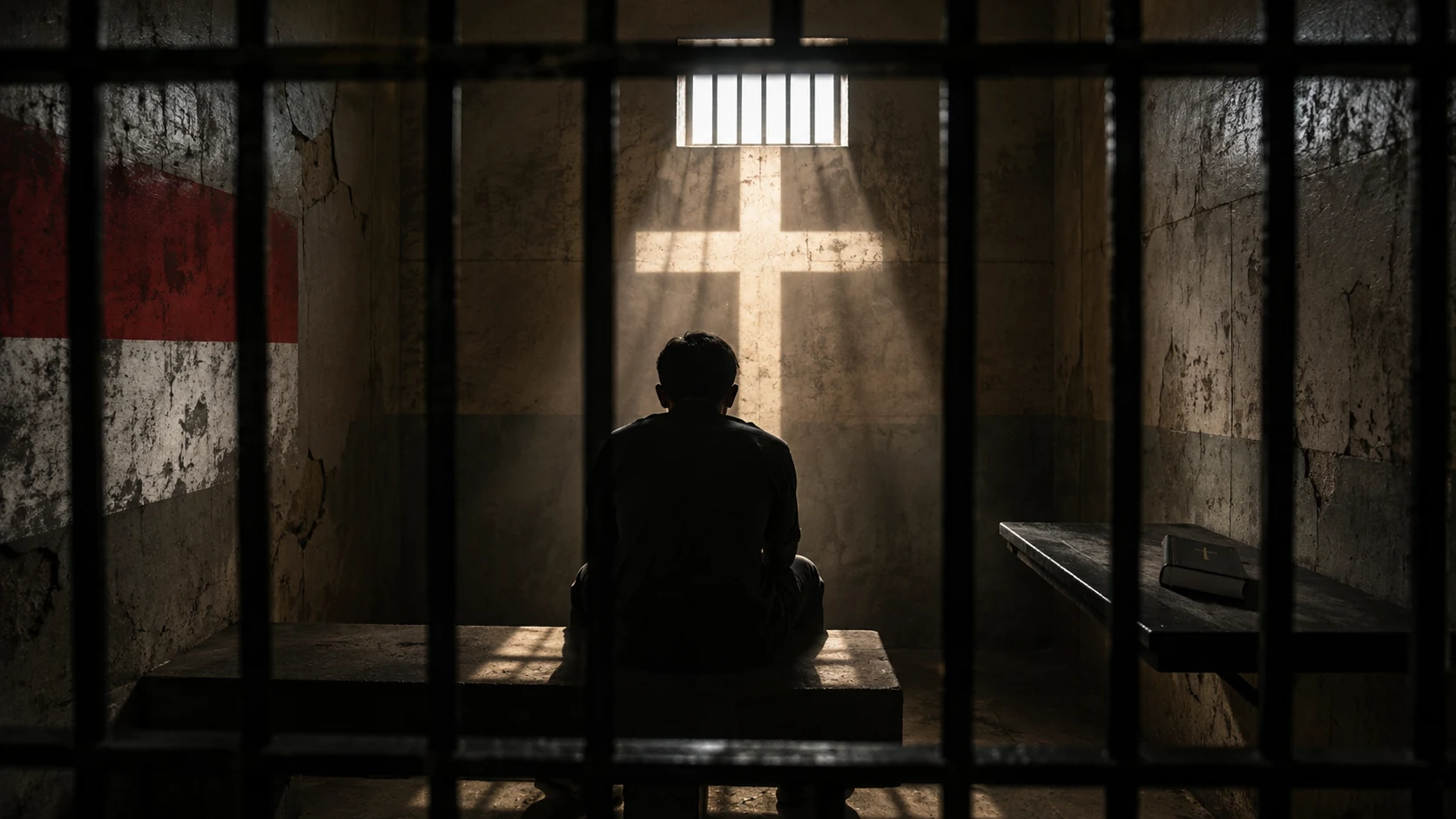
A Christian pastor who converted from Islam has been sentenced to two years in an Indonesian prison after videos he posted on TikTok were judged to constitute blasphemy and hate speech against Islam.
Dedi Saputra, 31, was sentenced by a three-judge panel at the Banda Aceh District Court on 10 July. Prosecutors had demanded a four-year prison term.
The case began with videos posted to Saputra’s TikTok account in October 2025 and raises a question that extends far beyond one pastor, one social-media account or even Indonesia:
Saputra’s comments were provocative. Some of his reported wording was also historically imprecise. But neither fact resolves the more fundamental problem.
Christianity and Islam make competing claims about God, Jesus Christ, Scripture and Muhammad. Christians must be free to examine Muhammad’s life and reject his claim to prophethood. Muslims must likewise be free to examine Christianity and argue against its claims.
When disagreement with a religion can lead to imprisonment, the state is no longer merely protecting believers from violence or discrimination. It is deciding which religious claims may safely be challenged.
From Muslim to Christian pastor
Saputra is originally from Aceh but had moved to West Kalimantan, where he was serving a small Christian congregation. Indonesian reporting and more recent Christian coverage describe him as a former Muslim who converted to Christianity. Academic research published before his arrest also documents Saputra publicly discussing his conversion online.
His TikTok activity eventually attracted the attention of authorities and Islamic organisations in Aceh.
Aceh’s Islamic Sharia Agency said in November 2025 that government representatives, Islamic scholars and organisations had agreed to pursue legal action over content they regarded as insulting Muhammad and the people of Aceh. A police complaint followed.
Police arrested Saputra in Bengkayang, West Kalimantan, on 18 February 2026. He was subsequently taken to Aceh and detained.
What did Saputra actually say?
This part of the story requires care.
The prosecution concerned a collection of social-media material rather than simply one isolated sentence. Indonesian reporting described material authorities considered insulting towards Muhammad, Islam and Acehnese people. Prosecutors ultimately said Saputra had distributed information containing hostility or hatred towards a religion or belief through information technology.
But one particular discussion became central to subsequent coverage.
While explaining his conversion, Saputra compared his own marriage with Muhammad’s marriages.
Reports differ slightly in their rendering of his words. Recent Christian reporting quotes him as saying that Muhammad had one wife before becoming a prophet but “dozens” afterwards. An Indonesian report from February rendered the disputed number as “a dozen.”
That distinction matters.
Accounts of Muhammad’s marriages commonly cited within Islamic tradition do not support an unlimited interpretation of “dozens”. The Muslim publication Suara Muhammadiyah, according to reporting on the case, put the number of wives after the beginning of Muhammad’s prophethood at 11 to 13 overall and said that nine remained at his death.
God Wins therefore does not need to defend every word Saputra reportedly used.
It can defend something much more important: his freedom to discuss it.
Two years in prison
Prosecutors asked the Banda Aceh court to imprison Saputra for four years.
They said his TikTok content constituted hate speech and blasphemy against Islam and had caused unrest in Aceh. Evidence presented in the case included six videos stored on a flash drive and Saputra’s TikTok account.
On 10 July, the court imposed a two-year sentence.
The judges found him guilty under Article 301(1) of Indonesia’s Criminal Code, in conjunction with legislation adjusting criminal penalties. The court said his actions had caused unrest among people in Aceh and conflicted with principles of interfaith tolerance.
This is an important distinction: although Aceh has a unique position within Indonesia and operates Sharia-based local rules, the provision cited in Saputra’s conviction was part of Indonesia’s national criminal law.
The problem with blasphemy laws
The issue is larger than whether Saputra expressed his argument wisely.
Human Rights Watch has repeatedly criticised Indonesia’s blasphemy regime. Indonesia’s new criminal code expanded the blasphemy chapter from one provision to six, and Human Rights Watch warned that the provisions threaten freedom of religion and expression and could particularly endanger religious minorities.
Its 2025 report said Indonesia’s blasphemy laws and religious regulations continued to put minorities at risk and that, although some provisions appeared neutral on paper, enforcement had largely operated to protect Islam. Christians were among the minority communities identified as affected by restrictions on religious activity.
Saputra’s case therefore cannot simply be dismissed as a dispute about good manners on TikTok.
There is an important distinction between protecting people and protecting ideas.
Muslims should be protected from violence, threats and unlawful discrimination because they are human beings possessing inherent dignity.
Christians deserve precisely the same protection.
But religions are systems of truth claims. Those claims must remain open to examination, criticism and rejection.
Christianity and Islam cannot both be right about everything
This is particularly important for Christians.
Christianity proclaims that Jesus Christ is the Son of God, that He was crucified and rose from the dead, and that reconciliation with God comes through Him.
Islam rejects fundamental elements of those claims and recognises Muhammad as God’s final prophet.
Those differences cannot be resolved by pretending they do not exist.
Religious freedom must therefore include the freedom to say that another religion is wrong.
A Muslim must be free to challenge the Bible and Christianity.
An atheist must be free to reject both Christianity and Islam.
And a Christian, including someone who has left Islam for Christianity, must be free to examine Muhammad’s life and teachings and conclude that he was not a prophet.
That freedom inevitably includes speech that believers may find offensive.
There is a legitimate boundary around threats, incitement to violence and targeted harassment. But offence alone cannot become the test for criminality without placing religious inquiry itself in danger.
The New Testament did not spread because the Roman authorities protected Christian doctrine from criticism.
The earliest Christians proclaimed Christ in a world frequently hostile to their message. Christianity ultimately asks people to accept its claims because they are true, not because the state makes disagreement with them illegal.
Truth does not need a prison cell
Christians need not endorse everything Saputra said to recognise what is at stake.
Perhaps his wording could have been more careful.
Perhaps his historical argument could have been more precise.
Those are reasons to answer him.
They are not reasons to imprison him.
The proper response to a questionable historical claim is evidence. The response to theological disagreement is argument. The response to evangelism is the freedom to accept it, reject it or answer it.
Once imprisonment becomes the response to religious criticism, a dangerous line has been crossed.
And genuine religious freedom requires something more demanding: the right of Christians, Muslims and everyone else to pursue the truth – including the freedom to reach different conclusions about it.
Sources
- ANTARA News Aceh – Banda Aceh court sentences blasphemy defendant to two years
- ANTARA News Aceh – Prosecutors sought a four-year sentence
- Aceh Islamic Sharia Agency – November 2025 statement concerning Saputra
- Christian Post / Morning Star News – Report on Saputra’s case
- Human Rights Watch – Indonesia’s criminal code and blasphemy provisions
- Human Rights Watch – World Report 2025: Indonesia