
Join the God Wins Newsletter
Christian news, commentary and Gospel outreach delivered directly to your inbox.
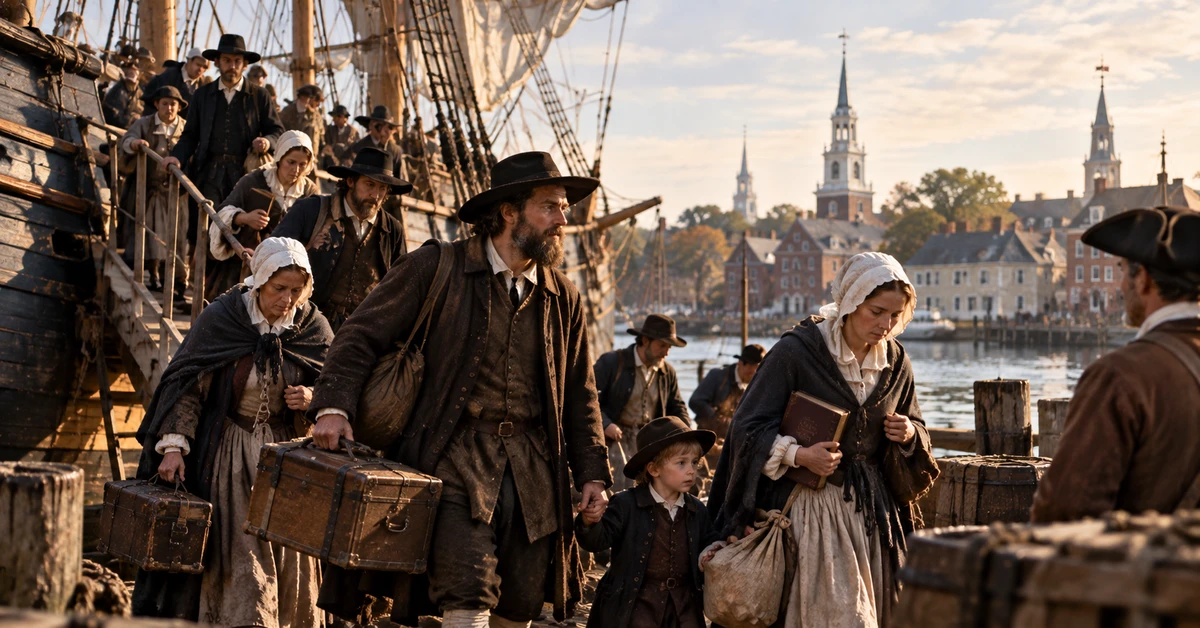
On 22 September 1734, a group of Schwenkfelder Christians reached Philadelphia after fleeing religious persecution in Europe and crossing the Atlantic in search of religious freedom.
The refugees were followers of Caspar Schwenckfeld, a 16th-century Silesian reformer whose teachings developed into a distinct Protestant movement.
After Schwenckfeld was declared a heretic in 1529, his followers continued practising their faith in Silesia. By the early 18th century, they were facing increasing religious pressure and persecution.
Attempts were made to convert the Schwenkfelders to Catholicism, while members of the community repeatedly petitioned authorities for greater religious freedom.
Those appeals ultimately failed.
Small groups began leaving Europe for Pennsylvania during the 1730s, attracted by the colony’s reputation for religious tolerance. The largest migration came in 1734.
The journey was difficult.
After leaving Europe, the refugees endured an Atlantic crossing lasting around three months before reaching Philadelphia. Historical accounts record deaths during the voyage.
The main group arrived aboard the St. Andrew in September 1734.
For the Schwenkfelders who reached Pennsylvania, their arrival offered something their community had long sought: the opportunity to practise their faith without the persecution they had experienced in Europe.
Two days after their arrival, on 24 September, they gathered under the leadership of George Weiss to give thanks to God for bringing them safely across the Atlantic.
It was not organised as a celebration.
The gathering was devoted to thanksgiving, prayer, reflection, renewed commitment to their faith and remembrance of those who had died during the journey. Morning and afternoon services included sermons, prayers and hymns.
Between the services, the refugees shared a simple meal.
That gathering became the beginning of a tradition known as Gedächtnistag, or the Day of Remembrance.
The observance has continued for generations and is now traditionally marked on the Sunday closest to 24 September.
The Schwenkfelders subsequently established communities in southeastern Pennsylvania. Their descendants became part of the wider Pennsylvania German community, while preserving the history of the people who had crossed the Atlantic in search of religious liberty.
Nearly three centuries later, the events of September 1734 remain part of Schwenkfelder identity.
A persecuted Christian community reached a place where it could worship freely.
Two days later, its first response was to gather and thank God.
Sources
- Schwenkfelder Library & Heritage Center — The Schwenkfelder Story
- Schwenkfelder Library & Heritage Center — Why They Came to America
- Schwenkfelder Library & Heritage Center — Day of Remembrance
Join the God Wins Newsletter
Christian news, commentary and Gospel outreach delivered directly to your inbox.